2026-01-19
Discover everything related to sponsorship and explore our comprehensive solutions.
Discover everything related to visa applications and explore our comprehensive solutions.
Discover everything related to pr & citizenships and explore our comprehensive solutions.
Discover everything related to study abroad and explore our comprehensive solutions.

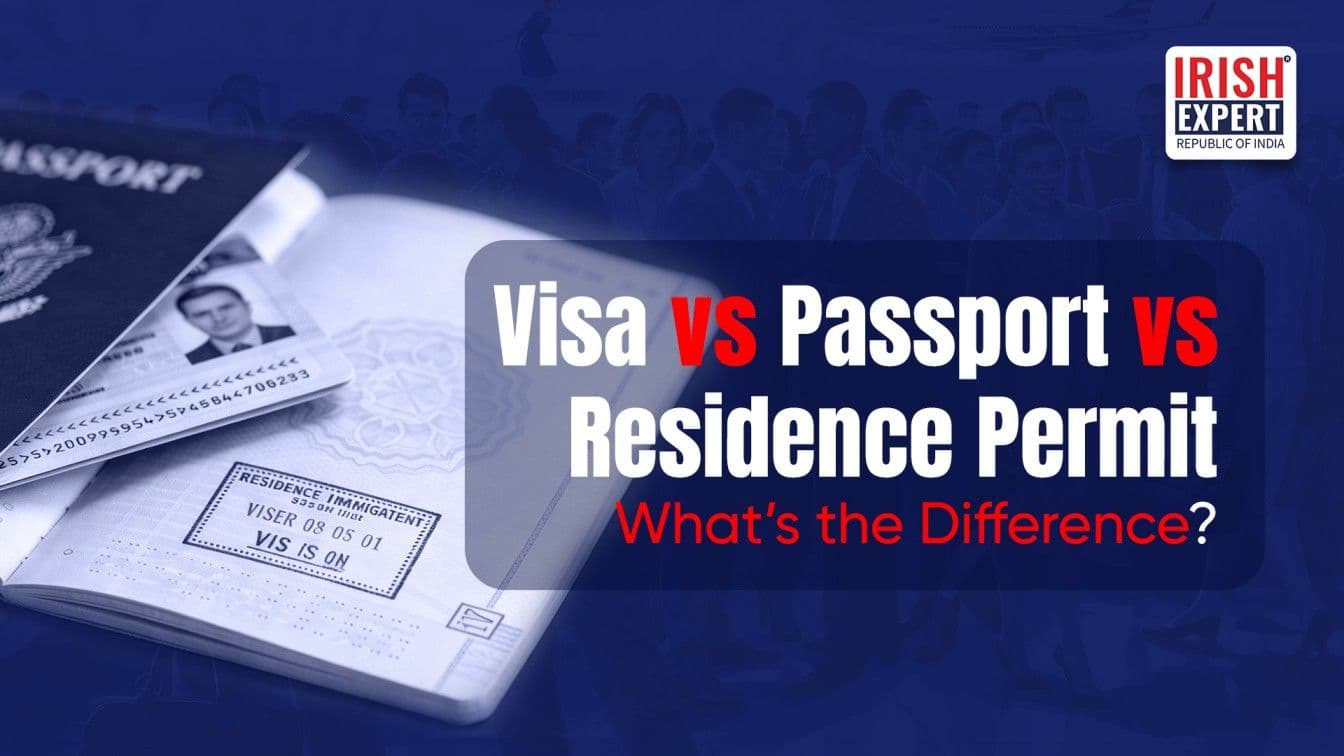
If you are planning to travel, study, work, or settle abroad, you will repeatedly come across three terms: passport, visa, and residence permit. Many people use these words interchangeably, but in reality, they serve very different purposes. Misunderstanding them can lead to application delays, rejections, or even legal trouble while abroad.
At IrishExpert, we often see candidates who are well-qualified but confused about which document they actually need. This guide explains the real difference between a passport, a visa, and a residence permit, how they work together, and when each one is required.
Before comparing them, it’s important to understand one key idea:
These three documents do not replace each other.
They work together, each serving a separate legal role.
Let’s break them down one by one.
A passport is your primary identity document for international travel. It is issued by your home country and proves two things:
A passport does not automatically allow you to:
Think of a passport as your international ID, not a permission slip.
A visa is an official permission granted by a foreign country that allows you to enter, stay, or travel through that country for a specific purpose and period.
A visa is usually stamped or digitally linked to your passport.
Each visa has:
A visa is essentially permission to knock on the door of another country.
A residence permit allows a foreign national to legally live in a country for an extended period after entering it—usually for work, study, or family reasons.
In many countries, a visa helps you enter, while a residence permit allows you to stay.
Key Characteristics of a Residence Permit
What a Residence Permit Allows You to Do
What a Residence Permit Does Not Do
A residence permit is your legal right to live inside the country after entry.
Let’s understand this with a practical example:
Example: Working Abroad
Passport
You need a valid passport to apply for anything.
Visa
You apply for a work visa that allows you to enter the country for employment.
Residence Permit
After arrival, you apply for or receive a residence permit that allows you to live and work legally.
If any one of these is missing or expired, your stay can become illegal—even if you are employed.
“I Have a Visa, So I Don’t Need a Residence Permit”Not always true. Many visas are entry visas, not stay permits.
“My Passport Expired but My Visa Is Valid”Your visa becomes useless without a valid passport.
“A Residence Permit Means Citizenship”A residence permit is not citizenship. It is temporary and conditional.
“Tourist Visa Allows Me to Work”“Tourist Visa Allows Me to Work”
Understanding the difference helps you:
Many rejections happen not due to lack of eligibility, but due to incorrect application strategy.
At IrishExpert, we don’t treat visa applications as paperwork alone. We focus on:
A strong resume, correct visa category, and realistic residence plan together improve approval chances significantly.
Each document serves a unique role. Confusing them can cost time, money, and opportunities. Understanding them empowers you to make smarter international career and migration decisions.
If you’re unsure which document you need or how to plan your application correctly, professional guidance can save you from costly mistakes.